

The Science of Artfit 3D
Scientific principles
-
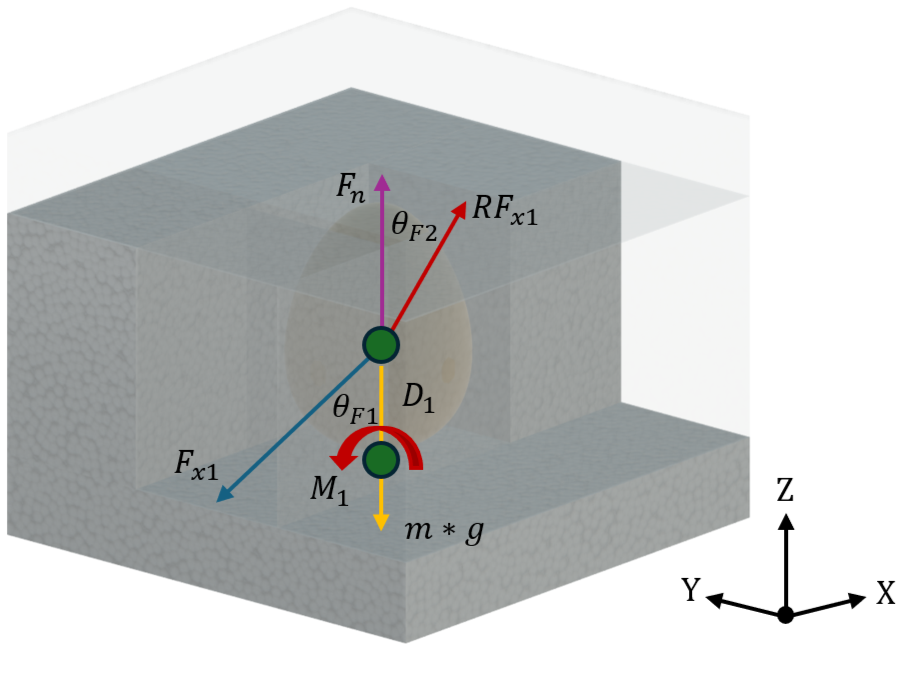
The downside of traditional packing methods
Traditional packing methods, using carved or flat foam, may not hold objects securely. If forces from different directions aren't considered, items can shift or rotate, raising the chance of damage during transport.
Pads that touch only small areas can create stress concentrations (excessive force on a small part of the object) that might damage the object's structure.
In this diagram, an egg is shown in a traditionally packed crate with flat foam edges. The forces acting on the egg are diagrammed, based on static equilibrium equations.
-
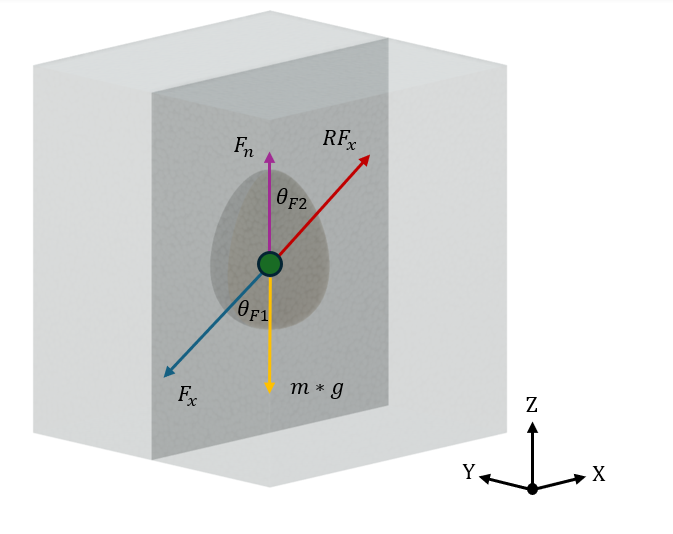
The advantages of advanced packing methods
A fully milled contoured cavity offers continuous support from all directions, securing the object and preventing movement caused by external forces.
This uniform support reduces the risk of stress concentrations by distributing contact forces more evenly across the object’s surface.
In this diagram, the egg is cradled in a CNC-milled contoured cavity that conforms perfectly to its surface.
Strategically placed contoured inserts around an object provide full directional support, keeping it static under multidirectional forces.
Expert design and execution is required to minimize unwanted stress.
-
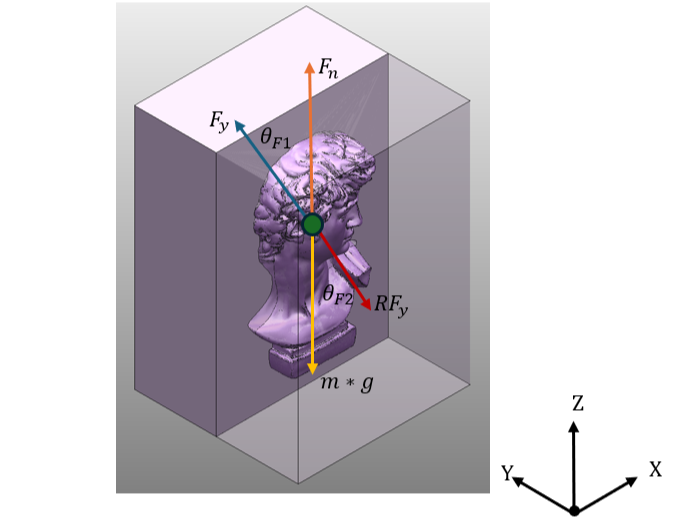
CNC-milled cavity packing
Computer Numerical Control (CNC) - milled contoured cavities capture fine details beyond the limits of manual carving. They offer strong multidirectional support, keeping the object stable under varying loads.
3D-Computer Aided Design (CAD) modeling and CNC milling also enable the integration of industry-required features, such as undercuts and side wall clearance, to support efficient packaging, storage, and removal.
Features like no-contact zones, offsets, and finger wells can be built into the design.
-
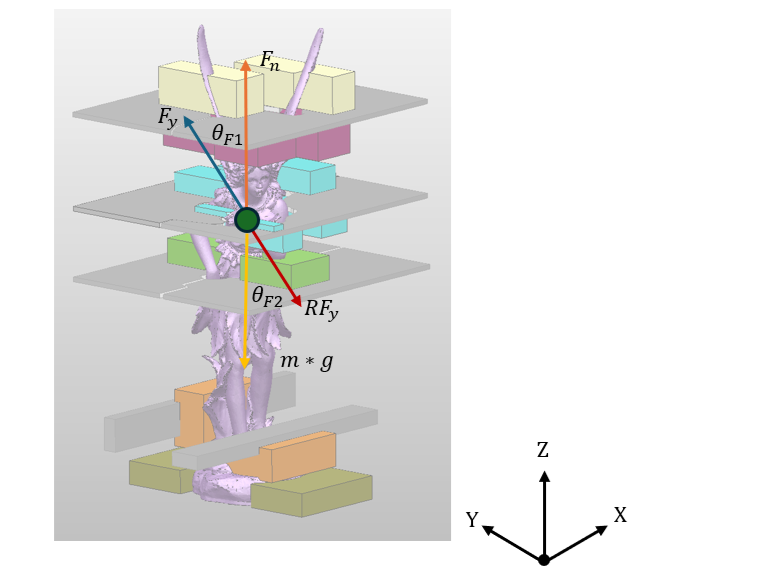
CNC-milled brace packing
Milled contoured brace inserts are optimal for securing large or complex objects.
This method secures larger objects without needing one massive cavity.
Wooden guillotines can be designed with the inserts, allowing everything to be assembled together.
Expert design is needed to not only provide targeted support and full six-degree-of-freedom stabilization, but also to minimize potential stress concentrations.